What you provide
The incoming requests, the responding party’s name and the relevant matter documents. Select the court and supply any dates needed for the response review.
Solutions
Examine the request or ruling before choosing the response. Review the supporting rule text, what the record preserves and what still needs to be checked before serving or filing.
Choose the tool
The incoming requests, the responding party’s name and the relevant matter documents. Select the court and supply any dates needed for the response review.
For each request: likely objections, the rule text behind them, a proposed response, what remains to be produced and the requesting party’s strongest reply.
An objection is useful only if it fits the actual request. The result keeps the request’s wording next to the proposed ground and explains what a narrower response would still need to address. The lawyer reviews privilege, withholding and production decisions before serving anything.
Practice context: Civil litigation →
The ruling, relevant hearing or trial transcript, objections and other record material needed to assess each issue. Supply the court and relevant dates.
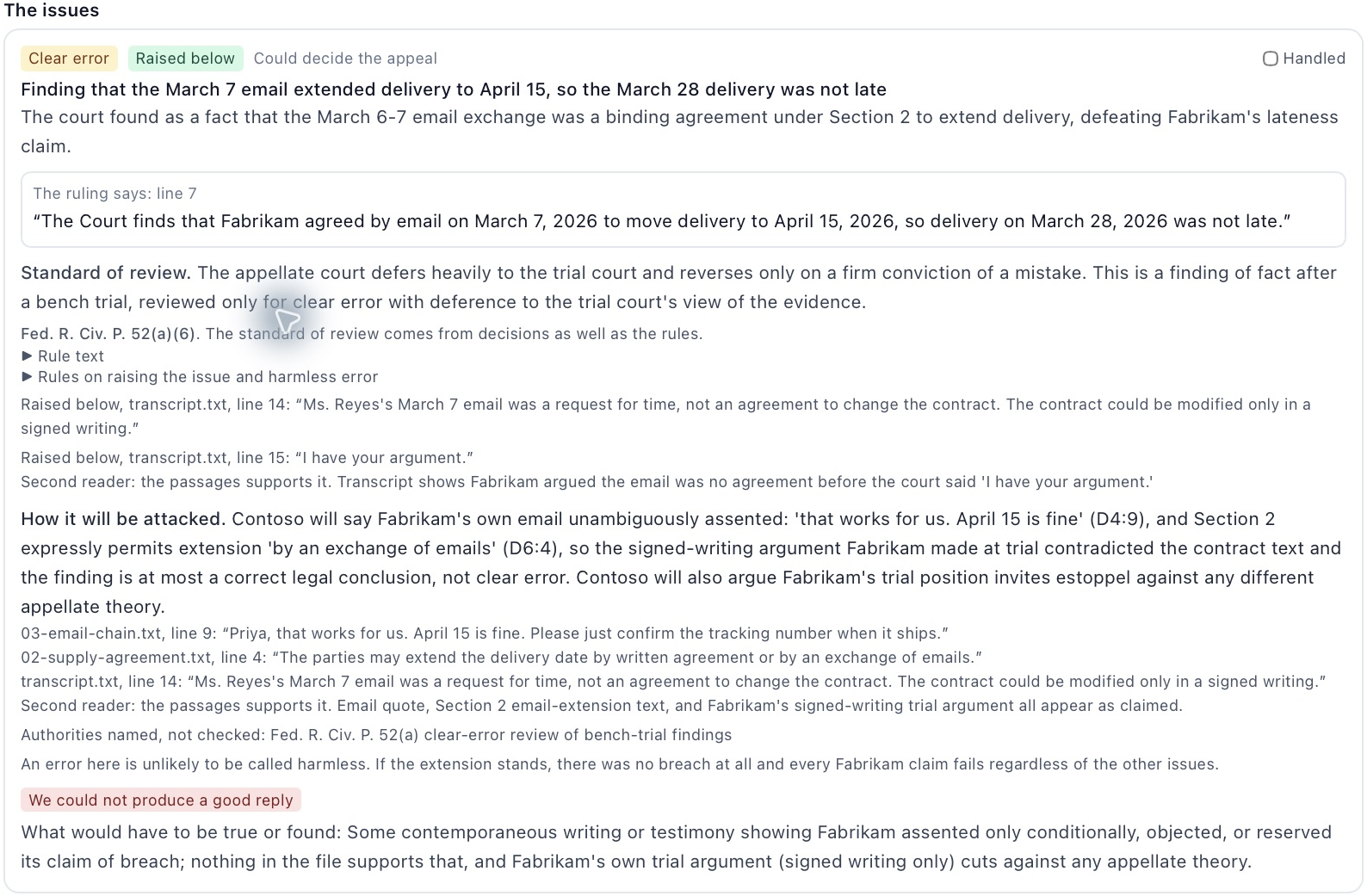
Issue-by-issue review of the available standard, preservation, likely attacks and appeal dates. Missing record material and uncertainty about the order remain visible.
A disagreement with the result and a preserved appellate issue are separate questions. The map reads the ruling alongside the record so the lawyer can see what was decided, what was raised and which missing document prevents a firmer conclusion.
Practice context: Civil litigation →
Open the completed task’s paper and its Ready to file? review. Keep the final version and the supporting matter documents available.
The authorities and record citations in the completed task, their check status, the lawyer’s open review items and a final-review statement.
The system can show existence and quotation checks. The lawyer must confirm the authority supports the proposition and remains good law, review the judge’s requirements and read the final paper. A handled or signed state records that review; it does not create a legal guarantee.
Practice context: Civil litigation →
A result, step by step / Invented sample documents
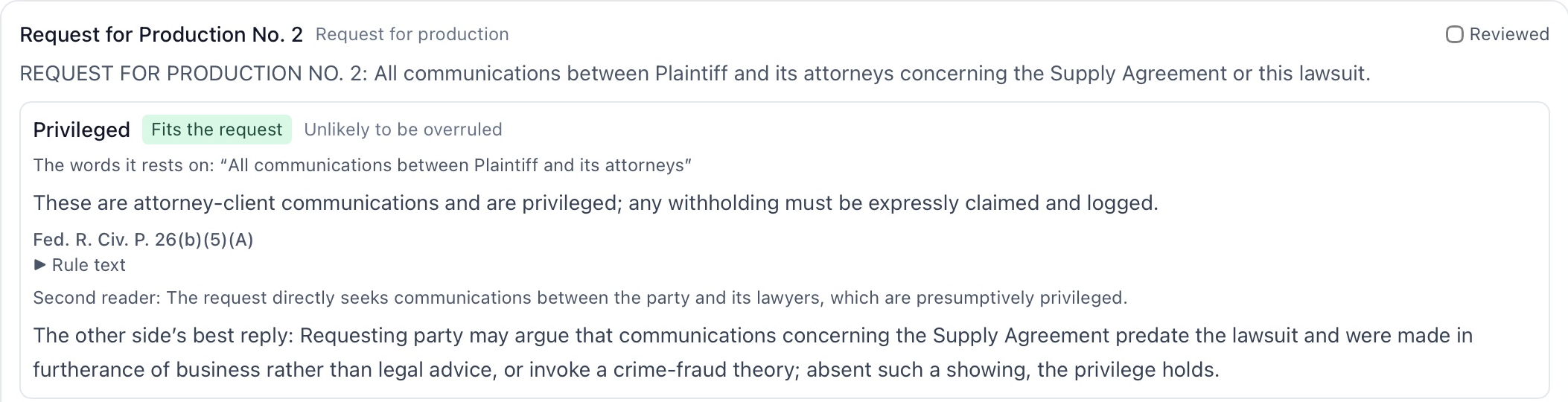
The invented Request for Production No. 2 asks for “All communications between Plaintiff and its attorneys concerning the Supply Agreement or this lawsuit.”
The actual review identifies the phrase concerning attorney communications, shows the federal rule reference and presents a privilege objection. It also asks how the requesting party could contest that position.
The request alone does not establish that every responsive document is privileged. Review the actual material, any withholding description and the production still required. The handled state records the lawyer’s work on the point; it is not a decision about privilege.
Where this fits in a matter
While preparing responses and before serving objections or production commitments.
After an adverse ruling and before deciding what appellate work is needed.
At the final document-review stage before filing.
Questions
It identifies possible objections, opposing replies and open production questions. The lawyer must assess the actual responsive material and any withholding duties. The result does not serve a response.
Provide the ruling and the relevant hearing or trial record. The review looks for issues, preservation and missing support. It cannot establish an objection that is absent from the supplied record.
The review shows available citation and record checks for the completed task. The lawyer confirms support, current law and the final paper’s requirements. A review state does not authorize filing or guarantee the paper.
Cortega Legal
Discuss the documents, the work and the practice’s deployment.